The following announcement was posted on the
Iaclals Yahoogroup (which I moderate). I have not seen it yet elsewhere on the net, and am therefore posting the announcement in full. Three striking things about this Chotro:
- No time in the known human history representatives of 800 natural languages have come together on a single platform. The World Language Meet and CHOTRO FOUR will no doubt be a major media story globally.
- The time allotted for presentation of papers will be limited to 20 minutes; but there will be an audience of more than 500 for every presentation.
- Since the Conference is about Intangible Heritage and Languages and Literature in Oral Traditions, or about Oral Traditions, Power Point Presentations will be discouraged.
No PowerPoint, but they do want the full text of the papers by 15 November 2011.
And they plan to publish the proceedings.
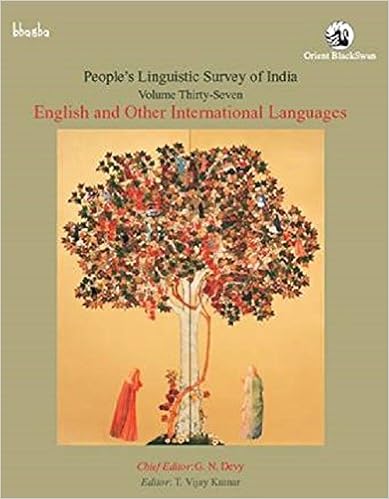
Incidentally, I've blogged before about one of the organizers, Ganesh Devy, who is coordinating the
People's Linguistic Survey of India.
Here's the announcement:
CHOTRO FOUR
January 6-8 2012
Vadodara, INDIA
IMAGINING THE INTANGIBLE
Languages, Literature and Visual Arts of the Indigenous
Bhasha Research and Publication Centre
In association with
European Association for Commonwealth
Literature and Language Studies (
EACLALS)
Call for Papers
In the past, Bhasha Research and Publication (BRPC) and the European association for Commonwealth Literature and Language Studies (EACLALS) have held three unconventional conferences in a format that has by now come to be recognized among academics and activists as Chotro.
CHOTRO FOUR
is being convened at Vadodara, from the 6th to the 8th January 2012. It will be held side by side with the World Language Meet in which representatives of nearly 800 languages are expected to participate for presenting the survey of their own language(s)
BRPC and EACLALS now seek to initiate discussion on:
- Culture and Development/ Culture for Development
- Notions of the Intangible in Relation to Oral Traditions of Literature,
- Traditional Knowledge of the Indigenous,
- Threatened and Endangered Languages,
- Semantics of Intern-generational Oral Communication,
- Visual Anthropology of Indigenous Arts,
- Aesthetics of Representation of Inheritance,
- Oral Translations, Memory Based Performance Traditions,
- Colonialism and Cultural Amnesia,
- State Structures and Language Loss,
Towards this end, the organizers seek papers for presentations. All attempts will be made to have the presented papers published in theme based volumes through reputed publishing houses. Papers presented in previous Chotro conferences have been published by Orient Blackswan in two volumes, and are being published by Routledge in two further volumes. The length of papers should be not less than 4000 words and not more than 6000 words.
Registration:
For registration in CHOTRO FOUR, scholars/ cultural activists should send by email the following information latest by the 31st July 2011 to ganesh_devy@yahoo.com; Geoffrey.davis@web.de; shae_bhasha@hotmail.com:
Name
Gender ( necessary for proper allotment of accommodation)
Institutional Affiliation, if any
Title of the proposed paper
E-mail address and Telephone Number
Conference Fee:
There will be several categories of conference fee:
- Overseas participants from Australia, Western Europe and North America: GBP 80/ Euro 120/ USD 150
- Overseas participants from African Countries, South America and Eastern Europe: USD 80
- Participants from South Asia: USD 50, Indian Rs. 2000
There will be no additional charges for accommodation and meals during the days of the Chotro. The Organizers will provide hotel accommodation on room sharing basis and all meals during the days of the Chotro.
ABSTRACTS:
A 200 word abstract of the paper proposed for presentation must be sent together with the mail indicating interest in participating Chotro. Acceptance of papers will be communicated latest by the 15th August 2011.
SUBMISSION OF PAPERS:
Full text of the paper will be expected by the 15th November 2011. Participants whose papers are short listed for publication will be informed about the theme of the volume and the publication details by the 15th January 2012. The full and revised text of the papers selected for publication will be expected by the 31st March 2012.
TRAVEL, VISA AND LOGISTICS:
CHOTRO is not a formal association or organization. It is very much a voluntary effort to focus on the shared heritage and destiny of the indigenous of the world. Therefore, overseas participants are strongly advised to apply for Tourist Visa.
VADODARA (also spelt as BARODA) is situated approximately 400 kms north of Bombay (also spelt as MUMBAI) and 1000 kms south of New Delhi. The city is connected with Mumbai and Delhi by train and air. The nearest airport is 1km from the city and is named VADODARA. There is another airport at a sdistance of 140 kms at AHMEDABAD and inexpensive pick up taxies are easily available to ferry you to Vadodara.
THE UNIQUE FEATURE OF CHOTRO FOUR:
No time in the known human history representatives of 800 natural languages have come together on a single platform. The World Language Meet and CHOTRO FOUR will no doubt be a major media story globally.
The time allotted for presentation of papers will be limited to 20 minutes; but there will be an audience of more than 500 for every presentation.
Since the Conference is about Intangible Heritage and Languages and Literature in Oral Traditions, or about Oral Traditions, Power Point Presentations will be discouraged.
Every participant will have an opportunity of listening to several hundred languages.
CHOTRO FOUR is designed as A NEVER BEFORE event.
Join us in the exciting work of providing voice to the voiceless!
K. K. Chakravarty
Chair
Bhasha Research and Publication Centre
Geoffrey Davis
Chair
European Association for Commonwealth Literature and Language Studies
Ganesh Devy
Founder,
Adivasi Academy
Head, People’s Linguistic Survey of India